World live weather AWS using Google maps
Temperature
View Larger Map
Pressure
View Larger Map
Wind direction
View Larger Map
Wind speed
View Larger Map
posted by John Harris at 8:15 am
|
0 comments

Welcome to the Radley College Geography Department weblog.
Temperature
View Larger Map
Pressure
View Larger Map
Wind direction
View Larger Map
Wind speed
View Larger Map
posted by John Harris at 8:15 am
|
0 comments
Source: Times 26 Sept, 2006 Paul Simmons
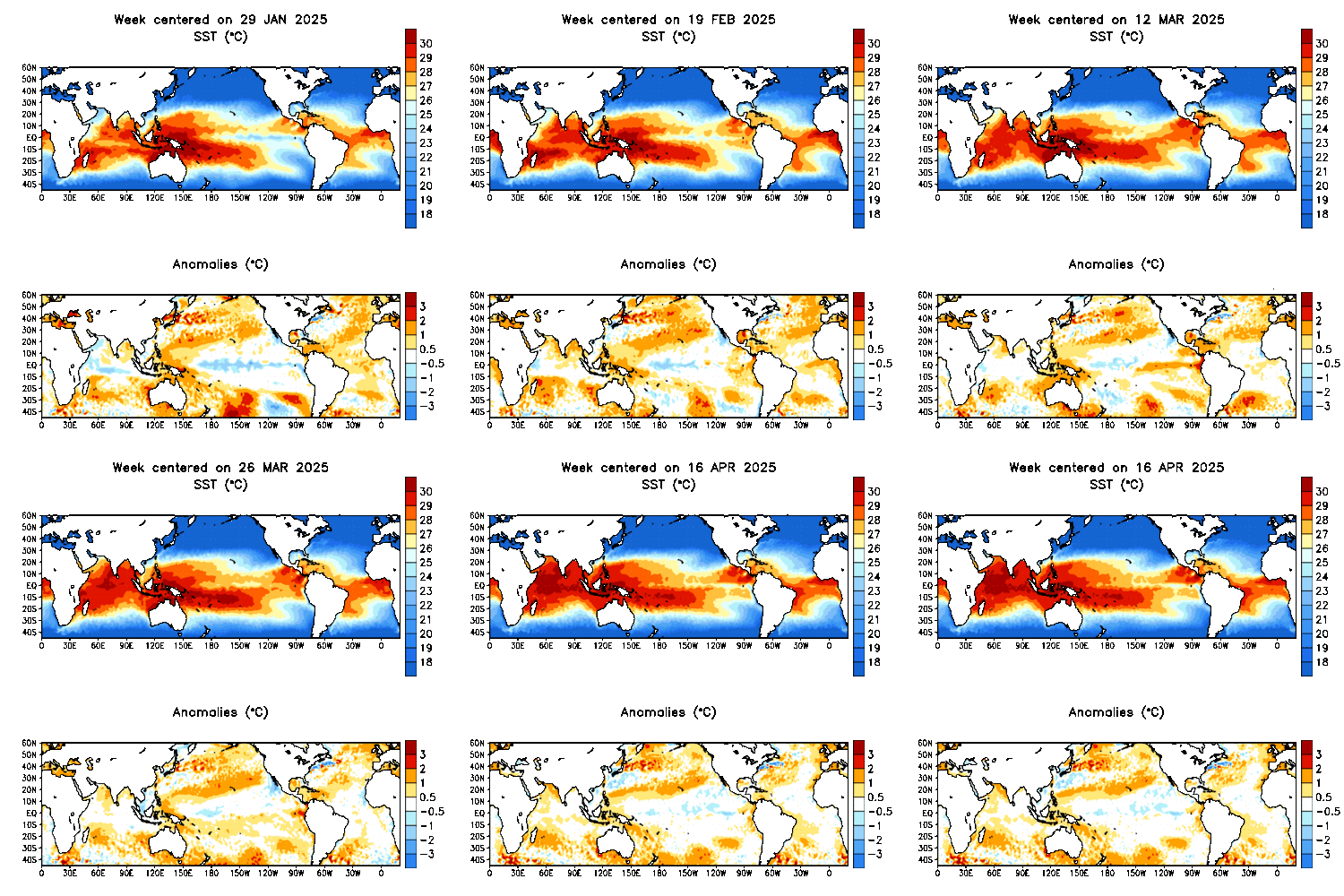
THIS winter may be colder than expected. Last week the Met Office revised its winter forecast to advise that it would start off mild then turn colder than average towards the end of winter, around February or March. The reason is the appearance of an El Niño emerging in the Pacific.
El Niño is a lurch in the tropical Pacific seas, as the prevailing winds change direction and warmer waters spread towards Latin America. El Niño varies in intensity, and at its most severe can cause devastating droughts or floods across a large part of the globe. Europe and the UK used to be thought to be too far away to come under the influence of El Niño, but, two years ago, a Swiss team of climatologists discovered that El Niño’s influence could indeed reach Europe, and had perhaps helped to change the course of the war.
They found that the unusually cold winters of 1940-42 were triggered by an El Niño. The ferocious cold of the winter of 1941-42 was a severe setback in the German invasion of the Soviet Union, when temperatures dropped to minus 40C (-40F), machinery froze and a quarter of a million troops died of cold and disease. On the other side of the world, a strong El Niño had set off disturbances in the stratosphere that surged like a wave, and which are believed to have created the cold in Europe.
posted by John Harris at 8:43 am
|
0 comments
From: The Times 13 March, 2006
MORE than 11 million people across East Africa are at risk of famine in the worst drought for two decades.
The failure of the usual seasonal rains for the past two years has turned a swath of Kenya, Somalia, Eritrea, Ethiopia, Uganda and Tanzania into a dustbowl. In fact, the rain cycle in the region has decreased steadily over the past decade, and the blame is being put on changing climate patterns caused by global warming and deforestation.
The current drought is set to grow even worse because of another climate problem, La Niña. This is the mirror image of the well-known El Niño phenomenon, when the Pacific changes temperature. Under La Niña, the tropical Pacific seas towards South America grow cooler and bring dry weather to western Latin America.
On the other side of the Pacific, the seas grow warmer and deliver torrential rains — already this has caused flooding in Australia, Indonesia and Malaysia, and last month set off the landslide in the Philippines that killed more than 1,000 people. But El Niña’s effects can reach much further, with drier conditions in East Africa.
This episode of La Niña has built up unusually early. Whether this will lead to greater impacts later is difficult to predict, but it will probably last into late spring and possibly into summer.
posted by John Harris at 6:17 am

DSCF0035
Originally uploaded by Geotraveller.
Sunday, 26 Feb, 2006. Pen y Fan and Cribyn. Wintry conditions in the Brecon Beacons, Wales, UK.
posted by John Harris at 6:38 am
|
0 comments

Morning mist
Originally uploaded by Geotraveller.
Early morning mist on the River Thames. Frid, 18 Jan, 2006
posted by John Harris at 8:38 am
|
0 comments

Radley 11 Feb, 2006
Originally uploaded by Geotraveller.
Radley 11 Feb, 2006 A bright, crisp, frosty morning. Contrails slowly spreading to form a thin veil of cirro-stratus. Temperature dropped to -2.5C overnight with a hard frost.
posted by John Harris at 12:34 am
|
0 comments
General Geography Information Weather
