Bonfire night - weather hazards
Times November 5, 2004
By Paul Simons
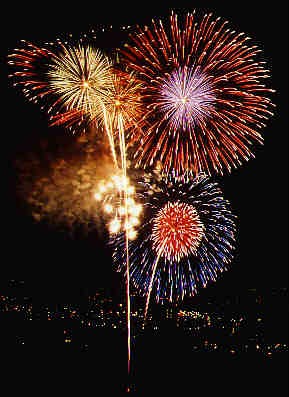
BONFIRE Night could be a dry night, delivered on a large high-pressure system anchored over the UK. But the clear skies and calm air may bring their own problems as the whiz, bang and smoke of thousands of firework displays leave behind a trail of air pollution.
Bonfires and fireworks give off smoke particles and noxious gases, and although they usually get blown away, there is a chance that the calm conditions could trap the pollution in cool air held close to the ground under a lid of warmer air — a temperature inversion. The list of pollutants includes dioxins, nitrogen oxides, ozone, sulphur dioxide and tiny soot particles called PM10s — these can be breathed deep into the lungs and are thought to trigger asthma, bronchitis and many other problems.
In some ways this is reminiscent of an old-fashioned peasouper smog, when coal smoke created a choking blanket of soot and sulphur with the acidity of a car battery.
London bore some of the worst smogs because it lies in a shallow basin, where air pollution can stew under a temperature inversion. In December 1952, a week of smog grew so dense that it remained dark all day, and tons of airborne soot and acid were reckoned to have killed 12,000 people — a disaster which led to the Clean Air Act banning dirty coal fires in cities.
posted by John Harris at 9:23 am


0 Comments:
Post a Comment
<< Home